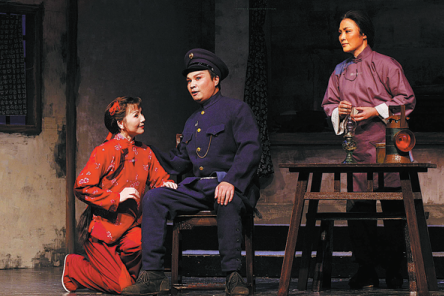
Huju Opera
Introduction
Huju Opera, also known as Shanghai Opera, is a traditional Chinese opera form that originated in the Jiangnan region, primarily encompassing Shanghai and surrounding areas. It is a significant cultural marker of Shanghai, representing the city's unique blend of traditional and modern influences.
Huju Opera is characterized by its use of the Shanghai dialect, which distinguishes it from other types of Chinese opera. This art form has earned a place in the heart of Shanghai's cultural identity, reflecting the city's history, its people and their stories through a unique operatic style.
History
The roots of Huju Opera stretch back to the late Qing Dynasty (1644-1911), evolving from the narrative styles of local folk music and storytelling traditions.
Originally, it was performed as a form of street performance, where itinerant artists would sing and tell stories. Over time, it absorbed elements from other regional operas and theatrical forms, gradually developing its distinct identity. In the 1950s and 1960s, Huju Opera gained significant popularity as it started to incorporate themes relevant to contemporary society, further solidifying its place in Chinese cultural heritage.
The establishment of the Shanghai Huju Opera Theater in 1953 (known as The Shanghai People's Huju Opera Troupe back then) marked a pivotal moment in its history, providing a dedicated platform for the development and professionalization of the art form. The theater has since played a crucial role in preserving traditional plays while fostering new creations that reflect modern sensibilities.
Characteristics
Performance Style
Performance style in Huju Opera is a dynamic blend of acting, singing and movement, with an emphasis on realism and emotional authenticity. Performers are trained to convey the nuances of the narrative through expressive gestures and facial expressions, engaging the audience in a compelling theatrical experience. Dialogue in Huju Opera is delivered in the Shanghai dialect, bridging the gap between traditional opera and contemporary theater. This accessibility helps to ground the performances in the reality of everyday life, making them relatable to audiences familiar with the cultural context.
Music
The music of Huju Opera is one of its defining elements, characterized by its melodic richness and emotive expression. The opera's musical structure is built on a foundation of traditional Chinese scales, with an emphasis on the Shanghainese musical idiom. Instrumentation typically includes traditional Chinese instruments such as the erhu and pipa, alongside percussion instruments that enhance the rhythmic drive of the performance.
The vocal style in Huju Opera is distinctive, with singers often employing a natural, conversational tone that mirrors the intonations of the Shanghai dialect. This creates a sense of immediacy and emotional depth, allowing the music to resonate deeply with the audience.
Costumes and Makeup
Costumes and makeup play a vital role in bringing Huju Opera characters to life, each carefully designed to reflect the character's personality, social status and role in the narrative. The costumes in Huju Opera are often less ornate than those found in other Chinese operas, reflecting the urban settings and contemporary themes commonly depicted in the performances.
Makeup in Huju Opera is applied to accentuate facial expressions and highlight the character's traits, employing a more subtle approach compared to the elaborate face painting seen in other forms of Chinese opera. This subtlety in costume and makeup contributes to the opera's focus on storytelling and character development.
Revival and Preservation Efforts
Efforts to revive and preserve Huju Opera have been ongoing, driven by both governmental and community initiatives.
The establishment of dedicated institutions, such as the Shanghai Huju Opera Theater, has provided a stable foundation for the continued development of the art form. These institutions have been instrumental in promoting Huju Opera through performances, educational programs and cultural exchanges.
Additionally, collaborations with academic institutions have helped to introduce Huju Opera to younger audiences, fostering an appreciation for traditional art forms. Technological advancements have also played a role in preservation efforts, with digitization projects helping to document and archive performances for future generations.








